There is one day of the year when Italy seems to stand still: cities empty out, shutters come down, shop doors display the sign «Chiuso per ferie» (“closed for holidays”) and millions of people gather at the seaside, in the mountains or around a long table set outdoors. It’s 15 August — Ferragosto: the most Italian holiday of the summer, the one no grammar book explains but which tells you more about the country than many lessons ever could. If you’re learning Italian, understanding Ferragosto means understanding how Italians live, rest and spend time together. Here is its history, its traditions and the words you need to experience it like a local.
From Emperor Augustus to today: two thousand years of Ferragosto
The name comes from the Latin Feriae Augusti, “the rest of Augustus”: it was Emperor Octavian Augustus himself who, in 18 BC, established a period of festivities marking the end of the heavy agricultural work of summer. It was celebrated with banquets, horse races and a curious custom: farm workers would bring good wishes to the landowners and receive a tip in return. Traces of that world survive to this day — the Palio di Siena on 16 August, with its horses hurtling around Piazza del Campo, descends directly from those ancient races.
Over the centuries, the Church layered a religious feast on top of the pagan one: 15 August became the day of the Assumption of Mary (l’Assunta), and in many Italian towns it is still the date of the patron saint’s festival, complete with processions, decorative lights and fireworks. The final transformation came in the 1930s, when discounted “people’s trains” (treni popolari) allowed millions of working-class families to reach the sea or the mountains for a day or two — for the very first time. That is how the Ferragosto day trip was born, and with it the habit — by now a national reflex — of spending 15 August away from home. If you enjoy discovering how festivals reveal a country, our journey through how cultural activities help you learn Italian makes an excellent companion read.
Passionate about Italian culture as much as the language? At Spaziolingua you learn them together, in a friendly school in the heart of Milan: contact us and discover our method.
How it’s celebrated: the lunch, the day trip, the sea
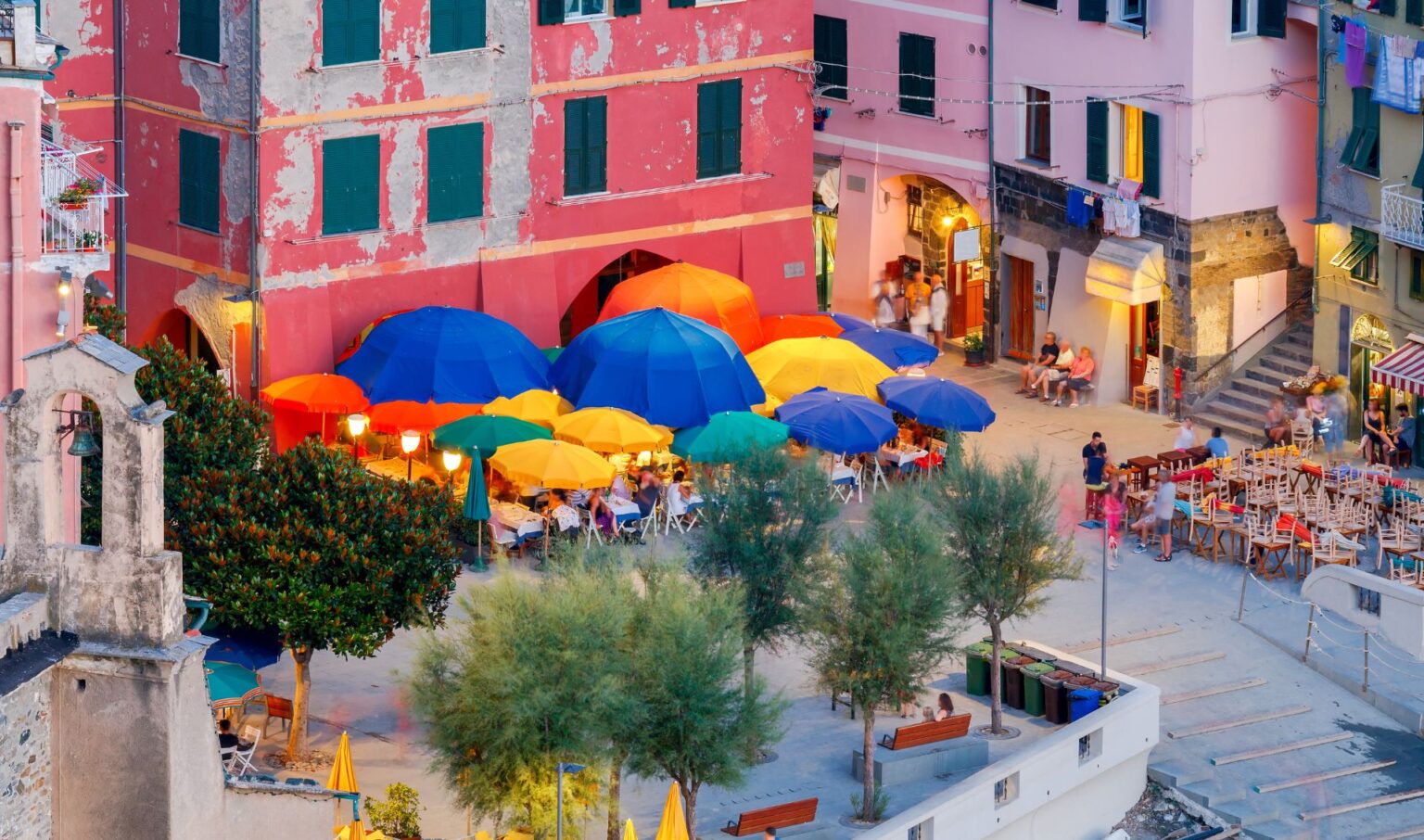
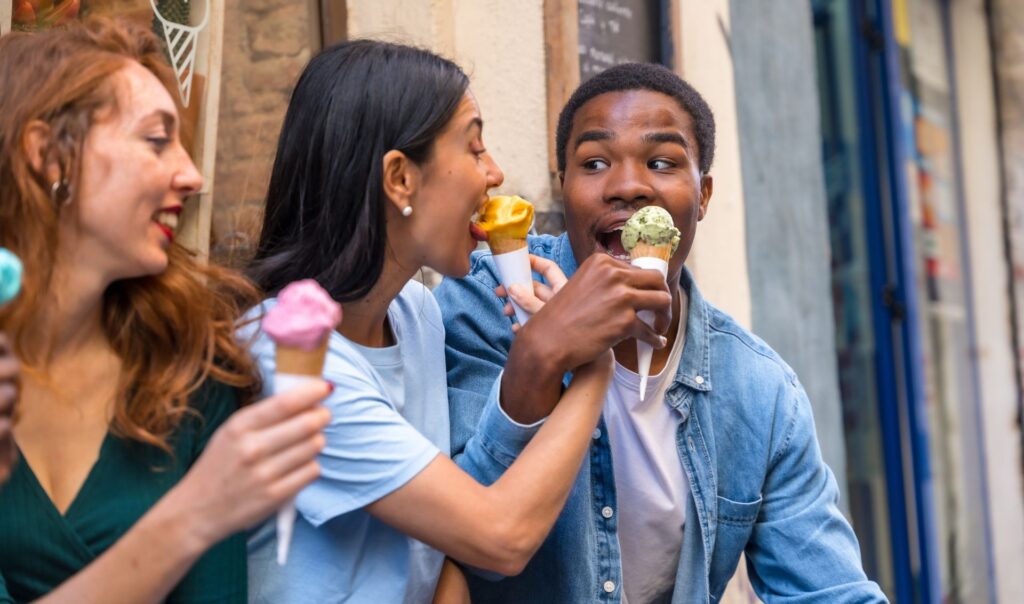
The heart of Ferragosto is the lunch. Long, shared, almost always outdoors: a barbecue in the garden, a big table at a mountain restaurant, a picnic under the pine trees. Every region brings its own dishes — chicken with peppers in Rome, gelu di muluna (a watermelon jelly) in Sicily, roast pigeon in parts of Tuscany — but one ingredient unites the whole peninsula: watermelon (anguria), served ice-cold at the end of the meal, ideally in slices so large they require both hands.
Then comes the gita fuori porta — the day trip out of town that Italians consider non-negotiable: to the beach at dawn to claim the front row of umbrellas, to the lakes, or up to the mountains in search of cool air. In the evening, many seaside towns light up with fireworks and bonfires on the beach, where people sing along to a guitar late into the night. And the following day, as punctual as the cicadas, the controesodo — the great return: motorway queues, news bulletins warning of “black sticker” traffic days, and the collective feeling that summer has passed its halfway mark. If you’re travelling in Italy during those days, our essential Italian phrases for tourists will serve you well in stations, on beaches and in trattorias.
YOU CAN ALSO READ
→ How cultural activities help you learn Italian
→ Travel Italian: essential phrases and tips for tourists
The vocabulary of the Italian summer
Ferragosto is also a goldmine of words you’ll rarely find in a textbook but will hear everywhere in August. Learning them means understanding real conversations — the ones at the bar, on the train, under the beach umbrella.
Le ferie — paid holidays from work. An Italian “goes in ferie“, and among colleagues in July there’s only one ritual question: “When are you taking yours?”
Chiuso per ferie — “closed for holidays”: the sign that blossoms on shop windows in August. The shop will reopen in September, and no amount of urgency will change that.
Il ponte — literally “the bridge”: when a public holiday falls close to a weekend and you “build a bridge” by joining the days off. A national art form.
Lo stabilimento balneare (or il lido) — the equipped beach club with umbrellas and sunbeds for rent, a bar and changing cabins. The alternative is the spiaggia libera, the free beach where everyone brings their own umbrella.
L’esodo / il controesodo — the great departure for the holidays and the great return home. On the news they come with the bollino nero, the “black sticker” marking the heaviest traffic day on the motorways.
La gita fuori porta — the one-day excursion just outside the city: neither a journey nor a simple walk, but an institution.
Buon Ferragosto! — the greeting everyone exchanges on 15 August, beach-umbrella neighbours included.
Many of these expressions also live inside idioms and everyday small talk: to go beyond the literal meaning of words, our article on Italian idioms and expressions is the perfect complement to this little summer dictionary.
Want to reach next Ferragosto speaking like this? Spaziolingua’s intensive Italian courses, with small classes and 45-minute modules, take you inside the living language — the one spoken in real conversations.
Ferragosto in Milan: the secret city
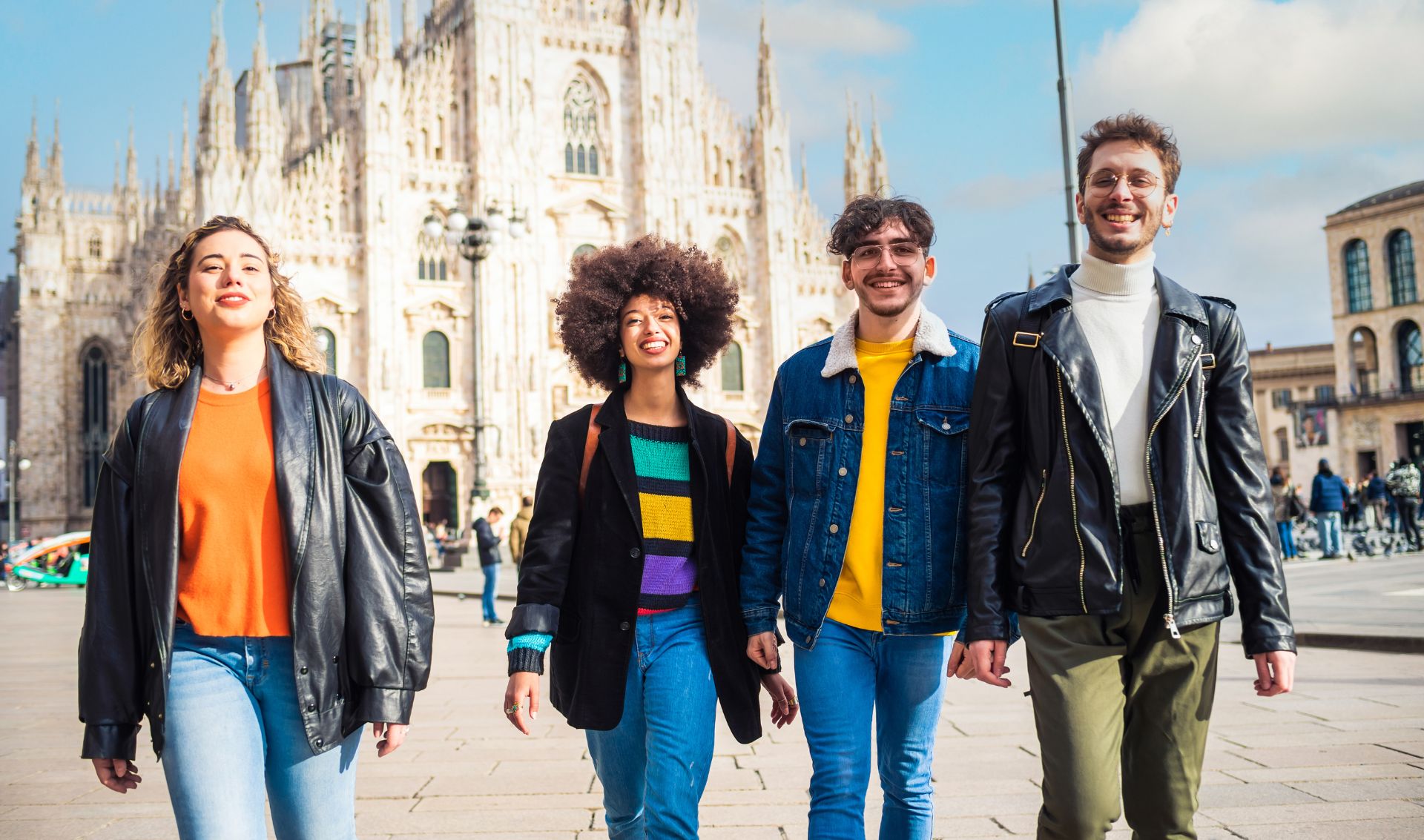
And what about those who stay in the city? In Milan, Ferragosto has a charm all of its own. The metropolis of work and appointments slows almost to a halt: empty streets, silent courtyards, shaded café tables with no waiting list. For a foreign student it’s a rare opportunity: the city finally lets you look at it. Many museums stay open on 15 August itself, the parks fill with picnics and the historic neighbourhoods can be explored on foot without the crowds. It’s the perfect moment to put your Italian into practice: ordering, asking, chatting with those who — like you — have chosen to stay. For ideas on how to fill those days, take a look at our itinerary for discovering Milan while learning Italian.
YOU CAN ALSO READ
→ Discover Milan while learning Italian: a cultural journey
→ Learning Italian through culture: art, cuisine, cinema
Language and culture belong together
Ferragosto teaches something that applies to all Italian learning: words have roots. Ferie comes straight from the Latin of Augustus; gita fuori porta speaks of cities that once truly had walls and gates (porte); chiuso per ferie says a great deal about Italians’ relationship with rest. Studying the language without the culture is like eating the watermelon without the Ferragosto lunch: you can do it, but you’re missing the best part.
That’s why at Spaziolingua language and culture travel together: in lessons, in workshops and in the social programme — aperitivi, city visits, real occasions to live Milan in Italian. Small classes and a method built on your level do the rest. Whether you’re in Milan for study, for work or for love of Italy, there’s a course that starts exactly where you are: from evening courses for those who work during the day to tailor-made individual courses.
So this year, when someone wishes you «Buon Ferragosto!» on 15 August, you’ll know exactly how an Italian replies: «Buon Ferragosto anche a te!» — “Happy Ferragosto to you too!” — ideally with a slice of watermelon in hand.
Experience Italian culture from the inside.
Take the free level test and find the right course for you: September is just around the corner.