On the morning of 1 November, outside the gates of Milan’s Cimitero Monumentale (Monumental Cemetery), the flower stalls are crowded with pots of yellow, white and purple blooms. A woman picks two bunches of crisantemi (chrysanthemums), a family arrives carrying a small candle, a group of tourists walks in with cameras round their necks. A few kilometres away, a pastry shop window has been showing dark biscuits dusted with icing sugar for a few days: the pan dei morti, literally “bread of the dead”.
If you’ve recently moved to Italy, early November can feel like a quiet, slightly mysterious time. In fact it’s one of the most deeply felt dates in the Italian calendar, with rituals, sweets and words that change from one region to the next. In this article we look at what is celebrated, how people mark it in Milan and around the country, and the vocabulary you need to follow — and join — the conversations of these days.
Two different days: Ognissanti and the Commemorazione dei defunti
They are often confused, but they are two separate occasions. 1 November is Ognissanti (All Saints’ Day), also called Tutti i Santi: the Catholic Church celebrates all saints, including those without a day of their own in the calendar. The name says it all: ogni (every) + santi (saints). It’s a national public holiday: schools, public offices and many shops are closed.
2 November is the Commemorazione dei defunti (All Souls’ Day), which everyone simply calls il giorno dei Morti — “the Day of the Dead”. It’s dedicated to remembering loved ones who have passed away. It is not a public holiday: people go to work and school as usual. That’s why many families visit the cemetery on 1 November, when they have the day off.
A calendar tip: when Ognissanti falls on a Tuesday or Thursday, many Italians fanno il ponte — literally “make the bridge” — taking a day’s leave to join the holiday to the weekend. In 2026, 1 November falls on a Sunday, so there’s no bridge this year: the holiday coincides with the weekend.
Cemeteries, flowers and candles
The most common thing people do these days is go to the cemetery to “visit” their loved ones: Italians actually say andare a trovare i nonni (“to go and see grandma and grandpa”), even when the grandparents are buried there. Graves are cleaned, flowers changed and a lumino lit — a small candle that can burn for days. In villages it’s a chance to meet relatives and neighbours, and the conversations at the cemetery gate are often more serene than you might expect.
Why chrysanthemums (and why you shouldn’t give them)
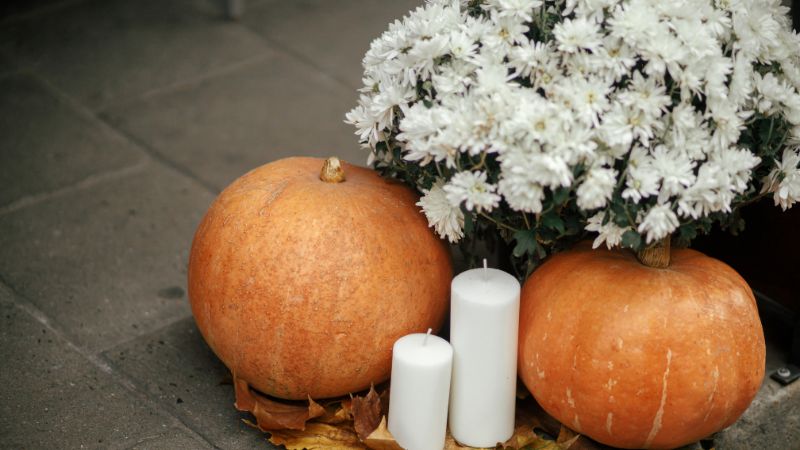
The crisantemo (chrysanthemum) blooms in autumn, withstands the cold and lasts a long time, which is why it became the flower of cemeteries. In Italy it’s so closely linked to mourning that it is never given as a gift on any other occasion. If Italian friends invite you to dinner, bring any other flower: a bunch of chrysanthemums would cause some embarrassment. It’s a good example of why language and culture need to be learned together: the word is easy, its symbolic weight is not.
Milan’s Monumentale
Milan’s best-known cemetery is the Cimitero Monumentale, opened in the second half of the 19th century. It’s a place of remembrance and also an open-air museum, full of sculptures, chapels and family tombs by well-known artists. Visiting it respectfully at this time of year helps you understand how central remembering the dead is to Italian culture. It’s one of the experiences we suggest to anyone who wants to see Milan beyond the usual sights — find more ideas in our guide to discovering Milan while learning Italian.
Want to understand Italy beyond grammar? In our intensive Italian courses language and culture go hand in hand, in small classes in the centre of Milan. |
Sweets of the dead, region by region
As with every Italian occasion, food plays a central role. The dolci dei morti (“sweets of the dead”) have names that may sound grim to a foreigner, but for Italians they mostly bring back childhood and the smell of pastry shops in autumn.
- Pan dei morti (Milan and Lombardy). Soft, dark biscuits made with crumbled dry biscuits, cocoa, nuts, figs and spices, dusted with icing sugar. In Milan you’ll find them in almost every pastry shop from late October to early November.
- Fave dei morti (Lombardy, Veneto and other regions). Small almond sweets shaped like broad beans (fave), sometimes coloured. Broad beans were linked to the cult of the dead as far back as antiquity.
- Ossa dei morti (“bones of the dead”). Crunchy white biscuits with an elongated shape, found in several regions with different recipes, from Sicily to Piedmont.
- Frutta martorana (Sicily). Marzipan fruits hand-painted with astonishing realism: peaches, prickly pears, chestnuts, even peppers.
Food is one of the most enjoyable ways into the language: every sweet comes with a name, a story and a family habit. If you like this approach, read about learning Italian through culture, art, food and cinema.
YOU CAN ALSO READ › Ferragosto: the holiday that explains the Italian summer and the words to live it |
When the dead bring presents: traditions of the South and the islands
In some parts of Italy, the night between 1 and 2 November is special for children. In Sicily, by tradition, it’s the family’s departed who bring gifts: on the morning of 2 November children find toys and sweets, often in a basket called a cannistru, together with marzipan fruit and pupi di zucchero — colourful sugar figurines. It’s an affectionate way of keeping the bond between generations alive.
In Sardinia there’s a custom that closely resembles Halloween but is much older: children go from house to house asking for an offering for the souls, and receive sweets, nuts or a few coins. Depending on the area it goes by different names, such as Is Animeddas or Su mortu mortu. In several areas of the north, families used to leave the table laid or a light burning on the night of 1 November, as a welcome for the dead returning to visit their homes.
Not all of these customs are still widespread, and they vary a lot from town to town. Asking an Italian friend «E a casa tua che cosa si faceva per i Morti?» (“And what did your family do for the Day of the Dead?”) is a great conversation starter: almost everyone has a memory to share.
Not sure where to start? Get in touch with our team: in a 15-minute call we’ll work out your level and the course that suits you best. |
How to talk about it: the right phrases
The mood of these days is particular: not a cheerful holiday, but not a gloomy time either. For Ognissanti, colleagues often wish each other «Buona festa!» (“Happy holiday!”) or, when there is one, «Buon ponte!» (“Enjoy the long weekend!”). On the giorno dei Morti, however, people don’t exchange greetings: they share memories instead. Sentences like «Domani vado a trovare mia nonna» (“Tomorrow I’m going to visit my grandmother”) or «Siamo andati al cimitero a portare i fiori» (“We went to the cemetery to bring flowers”) are very common and don’t call for special tact: just reply naturally, perhaps asking «Dove si trova?» (“Where is it?”) or «Eravate molto legati?» (“Were you very close?”).
A recent bereavement is different. If a colleague or friend has just lost someone, the most common phrase is «Le mie condoglianze» (“My condolences”; or just «Condoglianze» with people you address as tu), or «Mi dispiace molto» (“I’m very sorry”). They are simple expressions that work in any register. To know when to switch from Lei to tu in delicate situations like this, read our guide to formal and informal Italian.
What about Halloween?
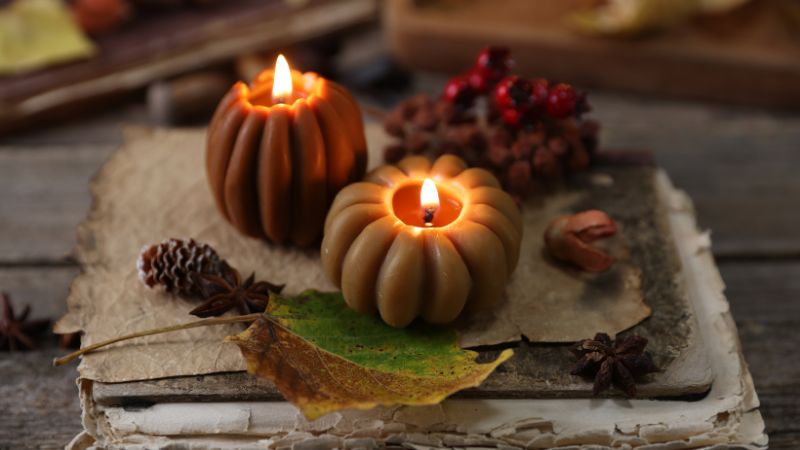
Over the last twenty years Halloween, on the evening of 31 October, has also become part of Italian life, especially among children and teenagers. In cities you’ll see carved pumpkins, costume parties and children ringing doorbells with a phrase translated from English: «Dolcetto o scherzetto?» (“Trick or treat?”). It isn’t an official holiday, and opinions differ: some see it as a commercial import, others point out its similarities with local customs like the Sardinian one.
For learners, Halloween is also a chance to practise some vocabulary: la zucca (pumpkin), il travestimento (costume), la strega (witch), il fantasma (ghost), mettere paura (to scare), fare uno scherzo (to play a trick). And to notice a grammar point: dolcetto and scherzetto are diminutives of dolce (sweet) and scherzo (joke), a form Italian uses all the time to express affection or lightness.
Early November words
Here’s a short glossary to keep handy over these days.
Italian | Meaning and use |
|---|---|
Ognissanti / Tutti i Santi | All Saints’ Day, 1 November — a public holiday across Italy |
Il giorno dei Morti | All Souls’ Day, 2 November — a normal working day |
I defunti / i propri cari | The departed / one’s loved ones (the warmer expression) |
Andare a trovare | To go and see someone, also used for visiting a grave |
Il crisantemo | Chrysanthemum — the cemetery flower; never give it as a gift |
Il lumino | The small candle lit on graves |
Fare il ponte | To take a day off between a holiday and the weekend |
Le condoglianze | Condolences: «Le mie condoglianze» (my condolences) |
Dolcetto o scherzetto? | The Italian version of “Trick or treat?” |
Some of these words also appear in everyday idioms, such as «non c’è un’anima» — literally “there isn’t a soul” — to say a place is deserted. If you enjoy expressions like this, you’ll find more in our guide to Italian idioms and expressions.
YOU CAN ALSO READ › Celebrating Italian Christmas Traditions While Learning the Language |
The dead in Italian literature
The bond with the departed runs through Italian literature too. The most famous text is Ugo Foscolo’s poem Dei Sepolcri (“Of Tombs”), published in 1807: prompted by a debate over new Napoleonic rules that moved burials outside city walls, it reflects on graves as a link between the living and the dead and as a nation’s memory. Almost a century later, Giovanni Pascoli devoted a poem in his collection Myricae to the Day of the Dead, imagining his family gathered at the cemetery.
You don’t need an advanced level to approach these writers: in class, even a few lines read with a teacher can open up discussions rich in vocabulary and culture. If you’re curious, our article on Italian films to learn the language suggests another accessible way into Italian culture.
Let the calendar be your teacher
Italian holidays are a great way to pace your language learning: each one comes with its own vocabulary, real situations and topics of conversation. After Ognissanti comes the estate di San Martino (St Martin’s summer, a spell of mild weather around 11 November), then the first December lights and Christmas, which we covered in our article on Italian Christmas traditions.
In Spaziolingua’s Italian courses in Milan culture isn’t an add-on: it comes into the classroom through texts and discussion, and through the social programme that takes students out into the city. If you work and are short on time, our Italian evening courses let you study after the office, in groups of up to 8 people.
November is a good month to start Contact us for a 15-minute introductory call: find out your level and choose the right course for you, in class or online. |